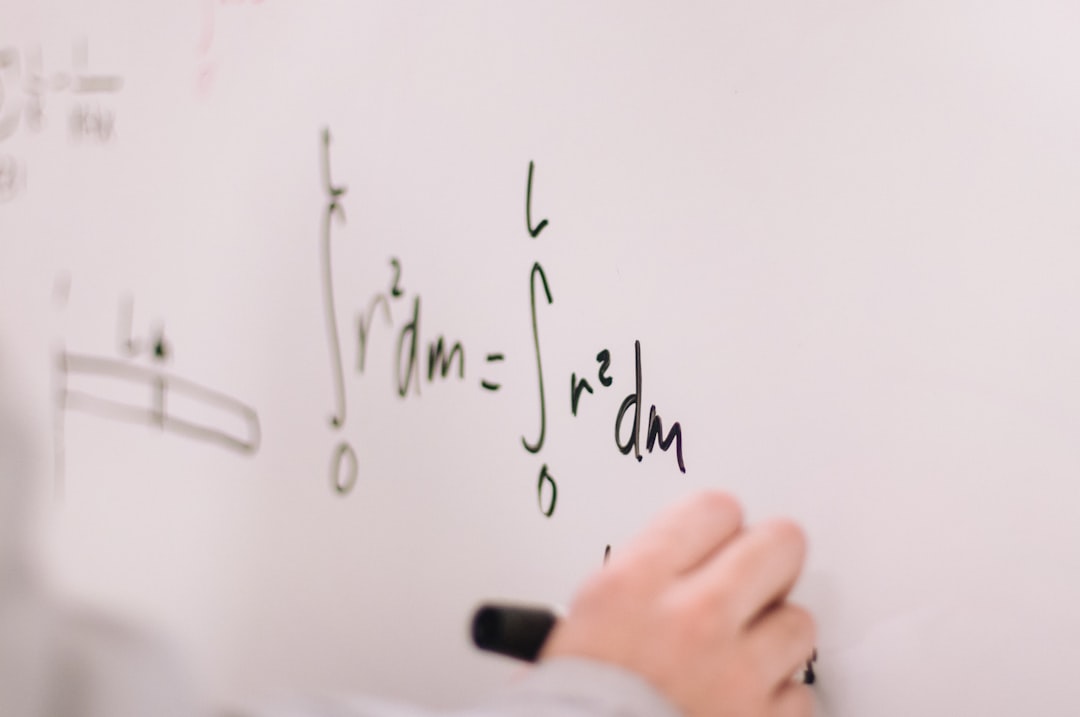
How to Make Math More Engaging With Hands-On Learning Tools
Math becomes memorable when learners can touch, move, and experiment with concepts instead of only watching them on a page. Hands-on tools turn abstract ideas into concrete experiences that build intuition, confidence, and deeper understanding.
This guide gives practical strategies for selecting tools, designing activities, and measuring progress so teachers and parents can make math lessons active, relevant, and fun.
Why hands-on math works
Manipulatives and tactile activities engage multiple senses and cognitive processes. They help learners form mental models, test hypotheses, and see relationships (for example, how ten ones make a ten). This supports retrieval, transfer, and problem solving better than rote practice alone.
Choose tools by the concept you want to teach
Match the tool to the learning goal. For early number sense, use counting sets; for place value, use base-ten blocks; for fractions, pick physical fraction sets; for geometry, provide compasses and protractors and tangible shapes. Curating a targeted collection reduces cognitive load and speeds mastery.
For example, a basic collection might include an abacus or other counting device to build fluency—see options for abacuses and counting tools that work well for early numeracy lessons.
Develop number sense with manipulatives
Number sense is the foundation of later math. Use manipulatives to explore decomposition, composition, estimation, and mental math strategies. Activities to try: build numbers with units and tens, compare quantities by grouping, and represent word problems physically.
Concrete materials like the base ten blocks make place-value lessons tangible so students can physically trade ten ones for one ten and see why regrouping works.
Teach fractions and ratios with tactile kits
Fractions challenge many learners because they require shifting from whole-number thinking. Hands-on fraction pieces, magnetic fraction tiles, and partitioned shapes let students compare sizes, compose fractions, and understand equivalence visually and kinesthetically.
Consider using magnetic fraction manipulatives for tabletop tasks and explore broader options in fraction learning kits for structured lesson sets and progressive practice.
Build geometry and spatial reasoning with tools and sets
Geometry benefits tremendously from physical exploration—measuring, folding, constructing, and tracing. Geometry sets that include compasses, protractors, and rulers let students experiment with angles, symmetry, and constructions. Three-dimensional models and magnetic shapes support spatial visualization.
Equip learners with a reliable compass and protractor set alongside complete geometry learning sets to practice precise constructions and explore theorems hands-on.
Use games and puzzles to strengthen reasoning and persistence
Game-based activities reduce anxiety and encourage trial-and-error. Puzzles, strategic board games, and logic challenges build pattern recognition, estimation, and problem-solving routines. Rotate short game sessions to reinforce lessons and reward effort and strategy, not just speed.
Stock a classroom or home math center with engaging math games and puzzles to make practice social and motivating during transitions or small-group work.
Integrate calculators and tech thoughtfully
Digital tools have a place: use graphing calculators and simple coding interfaces to extend patterns into functions, visualize data, and verify conjectures. Teach students when calculators save time and when manual methods deepen understanding. Pair calculator use with hands-on activities to link notation, computation, and concept.
Introduce advanced tasks using graphing calculators for exploring functions, slopes, and data visualization once students grasp underlying concepts physically.
Design activities that follow a simple progression
Sequence lessons from concrete to pictorial to abstract (CPA model). Start with manipulatives, then move to drawings and number sentences, and finally to symbolic notation and mental strategies. This scaffolding prevents gaps and makes transfer to paper-and-pencil tasks smoother.
Example lesson flow for fractions: manipulate tiles to create 3/4, draw equivalent shapes, write numeric representations, then solve word problems combining units.
Practical tips for classroom and home use
Keep tools organized, labeled, and accessible. Rotate materials to maintain novelty. Use short prompts and clear success criteria: “Show me 17 using two types of manipulatives” is faster and clearer than “work on place value.” Encourage student reflection: ask learners to explain how the tool helped them solve a problem.
- Store kits in clear bins with photos and vocabulary labels.
- Create small-group stations so every student gets hands-on time.
- Use timed challenges and cooperative tasks to build fluency and communication.
Checklist: Quick setup for a hands-on math session
- Objective: one clear skill (e.g., add two-digit numbers with regrouping)
- Materials: select 1–2 manipulatives (e.g., base ten blocks and counters)
- Task: scaffolded prompt (concrete → pictorial → abstract)
- Success check: specific evidence (student builds, draws, explains)
- Extension: a game or challenge from math games and puzzles
Assess progress without killing the fun
Use quick formative checks: ask students to show solutions with manipulatives, explain reasoning in one sentence, or complete a short performance task. Track errors to identify misconceptions; hands-on tasks often reveal whether a mistake stems from procedure, concept, or careless calculation.
When students can consistently move between manipulatives, diagrams, and symbolic work, they are ready for independent practice with calculators or written problems—use graphing calculators as tools for exploration, not crutches.
Sample lesson ideas to try tomorrow
- Place-value swap: students use base ten blocks to represent numbers and practice regrouping.
- Fraction fair: teams build equivalent fractions using magnetic fraction manipulatives and challenge others to convert between forms.
- Geometry construction lab: paired students draft polygons and measure angles with a compass and protractor set.
- Reasoning relay: small groups solve multi-step puzzles from a selection of math games and puzzles to practice strategy and communication.
FAQ
- Q: How long should a hands-on session last?
A: 15–30 minutes is effective for focused skills; longer for project-based activities. - Q: How do I prevent students from just playing with the materials?
A: Provide tight prompts, clear success criteria, and reflection questions that require explanation of thinking. - Q: Can older students benefit from manipulatives?
A: Yes—manipulatives help with algebraic thinking, functions, and geometry when used as models or visualizers alongside symbolic work. - Q: What if I have limited budget or storage?
A: Prioritize versatile items (e.g., counters, base-ten blocks, fraction sets) and rotate materials between classes or homes. - Q: Are digital simulations as effective as physical manipulatives?
A: They can be, especially when interactive; combine both for maximum flexibility and accessibility.
Conclusion — practical takeaway
Start small: pick one objective, select one or two targeted tools (for example, base-ten blocks and a fraction set), and plan a 20-minute session that moves students from concrete manipulation to symbolic representation. Track progress with quick performance checks and gradually add games, geometry tools, and calculators to deepen and extend learning.
For additional resources, curate a classroom collection that includes abacuses and counting tools, fraction learning kits, magnetic fraction manipulatives, targeted base ten blocks, geometry learning sets, a reliable compass and protractor set, playful math games and puzzles, and, when appropriate, graphing calculators to extend exploration.
Products Featured in This Article
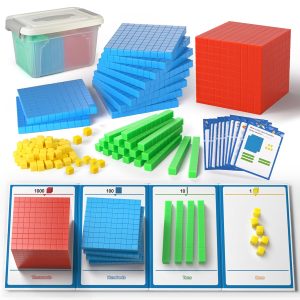
TOMMYHOME Base Ten Blocks with Plac…
Product description Allow parents and teachers to teach children maths more effectively. The Cube represents thousands…
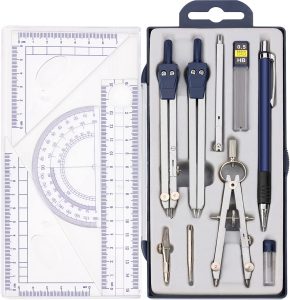
13 Pcs Compass and Protractors Set …
From the brand Welcome to Ysglory Shop Look forward to bringing you a different experience! School…
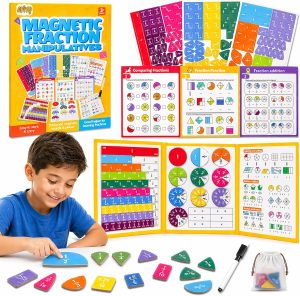
Magnetic Fraction Book, Montessori …
From the brand About APIYU Hands-on math tools designed to help kids see, build, and understand…