Intro
Choosing the right STEM toys for your child is more than picking something labeled “educational.” The best toys match developmental skills, build confidence, and invite repeated exploration.
Use age-appropriate goals—fine motor work for toddlers, cause-and-effect for preschoolers, and project-based challenges for older kids—to make playtime both fun and instructive. Browse curated options at StemParade to get ideas that align with these stages.
Why age matters when picking STEM toys
Children’s cognitive, motor, and social skills develop quickly. A toy that’s too advanced frustrates; one that’s too simple gets discarded. Age guidance on packaging is useful, but the best choice balances three things: safety, scaffolded challenge, and clear learning outcomes.
Ages 0–3: Foundations—sensory, cause-and-effect, and early counting
Toddlers are building hand control, object permanence, and basic number sense. Look for toys that are durable, have large parts, and reward simple actions. Stacking toys, chunky puzzles, and manipulatives that invite sorting and counting are ideal.
For early numeracy and tactile exploration, consider simple counting tools and bead-based counters from the Abacus & Counting Tools category. These foster one-to-one correspondence and fine-motor skills while being safe for little hands.
Ages 3–6: Curiosity and construction—basic engineering and imaginative play
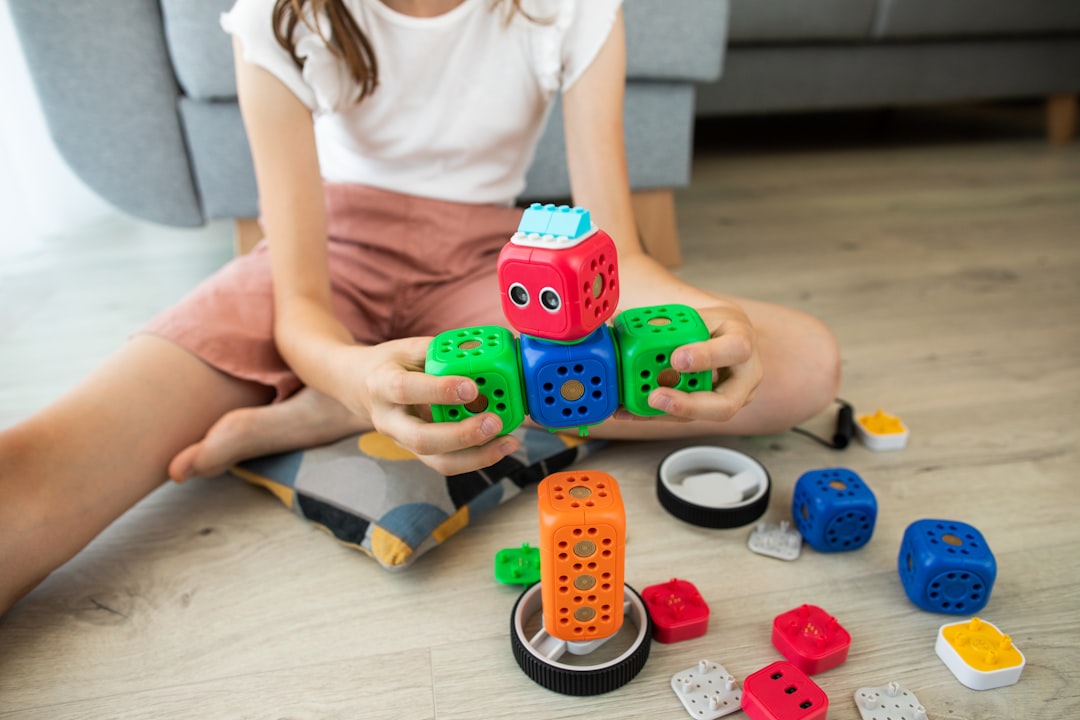
Preschoolers move from parallel play to cooperative projects. They enjoy building kits that let them assemble recognizable objects and experiment with balance, shapes, and simple mechanisms. Choose sets with clear instructions and parts that support creative variations.
Construction kits that emphasize snap-together building and magnetic connections boost spatial awareness and early engineering thinking. Browse age-appropriate options in the Engineering Construction Kits category to find durable, child-friendly starters.
Ages 6–9: Hands-on experiments—simple machines, chemistry, and critical thinking
Early elementary kids can follow multi-step instructions and test hypotheses. They benefit from kits that introduce mechanical principles, cause-and-effect experiments, and basic lab procedures under supervision.
Kits like the Thames & Kosmos Simple Machines Kit let children build models to explore levers, pulleys, and inclined planes—perfect for classroom reinforcement or weekend STEM projects. These kits combine construction with observation and iteration.
Ages 9–12: Projects and systems—coding, electronics, and multi-step builds
Upper elementary kids can handle prolonged projects that require planning, troubleshooting, and persistence. Good choices include robotics starters, renewable energy kits, and basic electronics that teach circuit thinking without dangerous components.
For learners ready to assemble and experiment with maker projects, the DIY Maker Kits category offers a range of solder-free electronics, solar experiments, and buildable models suited to this skill level. Look for kits that pair hands-on builds with clear learning objectives.
Tweens & teens: Advanced tools, specialization, and real-world applications
Older kids gravitate toward tools that mirror adult workflows—3D printing, CAD, advanced robotics, and math tools that support higher-level learning. These toys prepare teens for project-based learning and extracurricular competitions.
If your child is tackling algebra, precalculus, or engineering challenges, consider reliable devices from the Graphing Calculators category. They provide the functionality needed for complex problem solving and support STEM coursework in middle and high school.
Space and science-focused picks for all ages
Interest-driven topics like astronomy can motivate long-term engagement. For younger kids, planetarium projectors and models spark wonder; older children benefit from telescopes and space exploration kits that teach observational methods and data recording.
Introduce star maps and binocular-style kids’ telescopes to budding astronomers via the Kids Telescopes selection. A simple telescope plus a sky chart can lead to months of discovery and cross-disciplinary learning—math, physics, and storytelling.
Evaluating complexity, safety, and lasting value
When assessing a STEM toy, ask: Does it match current skills while offering room to grow? Are the materials safe for the child’s age? Is troubleshooting part of the play? High-quality toys that combine durability, modular parts, and open-ended play deliver lasting value.
Games and puzzles that strengthen reasoning and pattern recognition are excellent supplements. Explore options in the Math Games & Puzzles category when you want screen-free challenges that scale in difficulty and encourage cooperative play.
Checklist: How to choose the right STEM toy (quick)
- Match the toy to developmental skills (fine motor, logical thinking, planning).
- Check recommended age and inspect small parts for choking hazards.
- Prefer toys that allow multiple difficulty levels or expansions.
- Look for clear instructions plus opportunities to hypothesize and test.
- Choose durable materials and consider storage/space requirements.
- Balance guided kits with open-ended toys to encourage creativity.
FAQ
Q: How strict should I be about the age label on a toy?
A: Age labels are a baseline. Consider your child’s attention span, fine motor skills, and prior experience; advanced kids may benefit from slightly older-level kits if supervised.
Q: Are electronic kits safe for beginners?
A: Many kits are designed for beginners with low-voltage components and snap connections. Check product descriptions for recommended ages and supervision notes.
Q: How do I know if a toy will hold my child’s interest?
A: Look for scalable challenges, clear goals, and room for creativity. Toys that can be combined with other kits or expanded over time maintain interest longer.
Q: When should I introduce coding or robotics?
A: Start with visual block-based coding and simple robots around 6–9 years old. Move to text-based coding and more complex robotics projects as logical and planning skills mature.
Q: Should STEM toys be screen-free?
A: Both screen-free and digital-integrated toys have value. Screen-free items often promote tactile problem-solving; digital tools can simulate complex systems. Aim for balanced exposure.
Conclusion — practical takeaway
Choose STEM toys that meet your child where they are and push them a bit further. Prioritize safety and scalability: a durable kit with clear learning outcomes will engage your child longer and teach transferable skills. Use the categories and products recommended above as starting points, and rotate between guided experiments and open-ended play to build curiosity and competence.
Products Featured in This Article
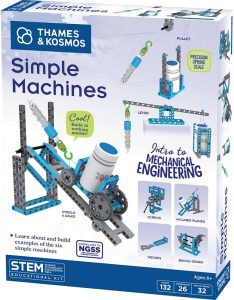
Thames & Kosmos Simple Machine…
Jumpstart your study of mechanical physics by learning all about simple machines and how they’re used…