How to Create a STEM Activity Corner for Kids at Home
Setting up a dedicated STEM activity corner at home gives children a consistent place to explore, tinker, and build habits that support science, technology, engineering, and math skills. A well-designed corner doesn’t need to be expensive—what matters is intentional organization, varied materials, and safe, age-appropriate projects that encourage curiosity.
This guide walks you through planning, equipping, and running a productive STEM corner with practical tips, recommended tools, a simple checklist, and a brief FAQ to help you get started quickly and confidently.
1. Pick the right location and layout
Choose a well-lit, low-traffic spot with a stable surface—ideally near storage and a power outlet. If space is tight, dedicate a shelf, a rolling cart, or a desktop area. Organize the corner into activity zones: building/tinkering, observation, and quiet/math work. Use clear bins and labeled trays so kids can find and return items independently.
2. Observation and nature zone
Hands-on observation fosters scientific thinking. Equip this corner with magnification tools and specimen kits so kids can examine plants, insects, rocks, and household materials.
For a solid starter tool, consider a reliable option like Student Microscopes to let kids view leaves, hair, and tiny structures at meaningful magnifications.
3. Astronomy and sky-watching area
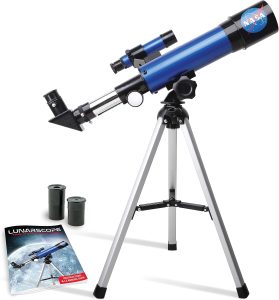
Include a simple, kid-friendly telescope and a way to bring the night sky into the room. Telescopes encourage longer-term projects—tracking phases of the moon, identifying planets, or sketching constellations.
An accessible telescope such as the NASA Lunar Telescope for Kids Ages 8-12 gives young learners a hands-on introduction to observing the moon and nearby planets.
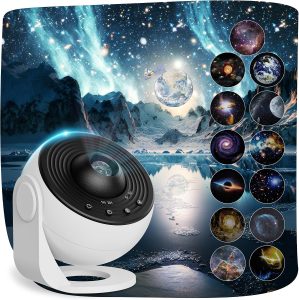
For indoor sessions and cozy evening explorations, a projection toy like the Galaxy Projector Night Light, 13-in-1 Star Projector creates an immersive backdrop for astronomy stories and guided observations.
4. Building, engineering, and robotics station
Provide kits and loose parts to build structures, machines, and robots. Kits reduce setup time and include instructions for stepwise challenges that teach engineering concepts like gears, levers, and simple machines.
For structured projects that scale in complexity, include a multi-project kit such as the Butterfly EduFields 70+ STEM Robotic Projects Kit. It supports creativity while teaching core mechanical and logical skills.
5. Electronics and coding corner
Introduce basic circuitry, sensors, and beginner programming with a microcontroller starter kit and safe solder-free activities. Keep a toolkit with insulated wires, jumper leads, and breadboards for experimentation.
A versatile starter kit like the ELEGOO UNO R3 Project Super Starter Kit pairs tutorials with hardware to let kids progress from blinking LEDs to simple interactive projects.
6. Energy, environment, and maker projects
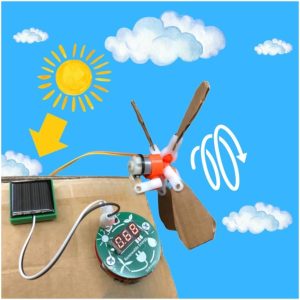
Teaching renewable energy and sustainability through construction helps kids connect science to real-world problems. Add kits that let them build solar panels or wind models and measure outputs.
The Renewable Energy STEM Kit – DIY Solar Panel & Wind Turbine is designed for hands-on experiments about power generation, efficiency, and environmental trade-offs.
7. Math and logic corner
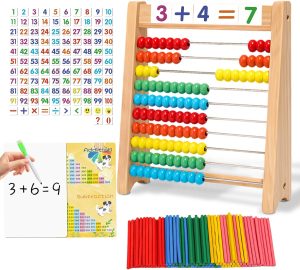
Math should be tactile and playful. Manipulatives and puzzles help kids internalize number sense, place value, fractions, and spatial reasoning. Rotate items to keep challenges fresh.
A classic manipulative like the Abacus for Kids Math Wooden Abacus supports counting and place-value activities, while simple geometry tools and puzzles can extend learning.
8. Earth science and geology activities
Geology kits and mineral specimens are perfect for tactile investigation and classification tasks. Kids can form hypotheses about hardness, crystal shapes, and origins, then test them.
A beginner-friendly kit like the National Geographic Break Open 10 Premium Geodes lets children crack open real geodes and examine crystal interiors—great for guided observation lessons.
Practical organization and safety tips
Keep small parts in compartmentalized boxes, label everything, and store hazardous items (soldering irons, sharp tools) out of reach. Use cable organizers for electronics and a wipe-clean mat for messy experiments. Establish clear rules: adult supervision for hot or sharp activities, a clean-up routine after each session, and a simple lab notebook to record observations.
Simple rotating project plan (monthly)
Rotate monthly themes to cover core STEM areas and maintain interest. Example month plan:
- Month 1: Observation—microscope investigations and a leaf journal
- Month 2: Space—night-sky observations and constellation charts
- Month 3: Engineering—robotics kit builds and challenges
- Month 4: Energy—solar and wind experiments
- Month 5: Math—puzzles, manipulatives, and measurement games
- Month 6: Earth science—geode cracking and rock classification
Quick supplies checklist
- Work surface (table or rolling cart)
- Storage bins and labels
- Observation tools (microscope)
- A kid-friendly telescope or projection tool
- A variety of hands-on kits (robotics, electronics, renewable energy)
- Basic toolkit (scissors, tape, rulers, safety goggles)
- Notebooks and pencils for logs and diagrams
- Cleanup supplies (wipes, small dustpan, hand sanitizer)
FAQ
-
How much time should kids spend in the STEM corner?
Short, focused sessions (20–45 minutes) work well for younger children; older kids can manage longer blocks. Consistency—several times a week—is more important than long sessions.
-
What age is appropriate for kits and tools?
Choose kits marked for your child’s age range and supervise activities involving small parts or tools. Many kits scale complexity—start simple and add challenges as skills grow.
-
Can I build this on a small budget?
Yes. Prioritize a few versatile items (microscope, basic electronics kit, building kit) and supplement with household materials. Rotate activities to keep costs down.
-
How do I keep the corner engaging long-term?
Rotate themes, set project goals, encourage documentation, and introduce challenges or mini-competitions. Incorporate real-world problems like energy efficiency or habitat design.
-
Are kits necessary, or can we make our own projects?
Kits accelerate learning and provide structured progressions. Homemade projects are excellent too—use both to balance guided instruction and open-ended creativity.
Conclusion
A functional STEM activity corner balances structure and freedom: clear zones, age-appropriate tools, rotating projects, and safety. Start small with a microscope, a beginner electronics kit, a building kit, and a few manipulatives, then expand based on your child’s interests. The simplest takeaway: make it accessible, organized, and fun—consistency will turn curiosity into lasting skills.
Products Featured in This Article
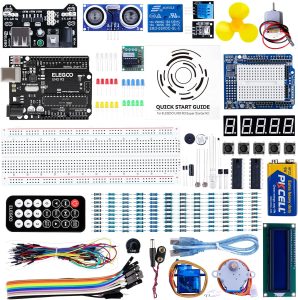
ELEGOO UNO R3 Project Super Starter…
From the brand ELEGOO STEM kits provide all the necessary components, sensors, wires, and boards for…
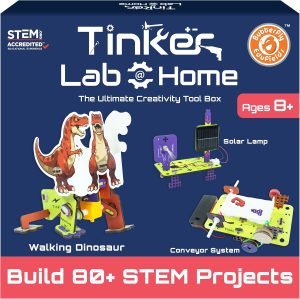
Butterfly EduFields 70+ STEM Roboti…
From the brand Best Sellers Science Kits – New Launches STEM Kit For Kids Ages 8-15…
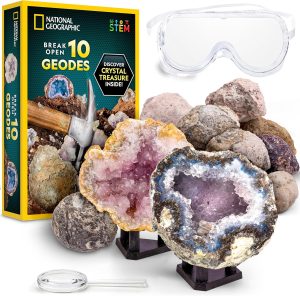
National Geographic Break Open 10 P…
From the brand Hands-On Halloween Fun New Products & Best Sellers Science Kits Early Learning Craft…
Renewable Energy STEM Kit – DIY S…
Product description Discover the fundamentals of clean energy with this Renewable Energy STEM Kit. Designed for…
Abacus for Kids Math Wooden Abacus …
Product description Highly Recommended Products Add to Cart Add to Cart Add to Cart Add to…
NASA Lunar Telescope for Kids Ages …
Product description NASA Lunarscope Tabletop Telescope The video showcases the product in use.The video guides you…
Galaxy Projector Night Light, 13-in…
From the brand Fusion LED Projector Fussion focuses on various atmosphere lights. Our aim is to…