
Best STEM Skills to Encourage at Different Ages
Encouraging STEM skills is less about pushing a rigid curriculum and more about matching experiences to a child’s natural development. The right activities build curiosity, problem-solving, and confidence—skills that last a lifetime.
Below you’ll find age-by-age guidance, practical activities, and recommended kit types to support each stage. For a curated selection of tools and kits that suit these recommendations, see StemParade.
0–5 years: Curiosity, language, and basic number sense
At this stage focus on observation, descriptive language, pattern recognition, and fine-motor play. Simple activities—naming body parts, sorting toys by color or size, and counting snack pieces—lay the groundwork for later math and science.
Tools: sturdy counting manipulatives and simple puzzles. Try resources like Abacus & Counting Tools to make counting tactile and repeatable; wooden abacuses and place-value blocks help kids internalize quantity and one-to-one correspondence.
5–8 years: Hands-on exploration and early engineering
Children begin to build multi-step projects and understand cause-and-effect. Encourage building with blocks, simple machine play, and guided experiments that show how things move and interact.
Choose kits that let children assemble and test models of levers, pulleys, and gears. The Thames & Kosmos Simple Machines kit provides structured builds and explanations—great for supervised exploration of physical principles.
8–11 years: Basic coding, structured experiments, and experimental design
Upper-elementary kids can handle multi-step instructions, record observations, and debug simple projects. Introduce block-based coding, beginner electronics, and open-ended science kits that require planning and iteration.
Choose all-in-one STEM project kits with many build options to maintain interest and foster problem-solving. The Butterfly EduFields 30in1 kit is designed for this age range—helpful for learning circuits, sensors, and mechanical builds while reinforcing troubleshooting skills.
11–14 years: Intermediate electronics, robotics, and abstract math
Middle-schoolers are ready for tools that treat them as junior engineers: solder-less electronics, Arduino clones, robotics modules, and beginning algebra/geometry challenges. Projects should require planning, component selection, and iterative testing.
An electronics starter kit like the ELEGOO UNO R3 Project Super Starter Kit offers a low barrier to entry for programming microcontrollers, using sensors, and building interactive systems while teaching logical sequencing and debugging.
14–18 years: Software, hardware integration, and experimental independence
High schoolers benefit from projects that integrate software and hardware, support independent research, and map to real-world applications. Emphasize systems thinking: how sensors, processors, and actuators work together, and how data informs decisions.
Raspberry Pi platforms are ideal for combining coding, electronics, and data projects. Explore Raspberry Pi Starter Kits for networked projects, data logging, basic AI experiments, and as gateways to higher-level computer science concepts.
Lab and observation skills at any age
Observational science—microscopy, dissection of models, and careful recording—teaches precision, replication, and the scientific method. These skills scale with age: guided observations for younger kids and independent investigations for teens.
Microscopes that match user ability help maintain interest. For school-age kids and beginners, consider Student Microscopes to practice sample preparation, focusing techniques, and note-taking that feed into hypothesis-driven experiments.
Inspiring curiosity with space and natural science
Space-themed activities captivate many learners and motivate cross-disciplinary study—math for orbital calculations, physics for motion, engineering for telescope design, and coding for data collection.
For direct engagement, age-appropriate telescopes spark observational habits and long-term interest. Consider Kids Telescopes for beginner astronomy sessions that teach sky navigation, object identification, and patient data collection.
Checklist: Quick guide to choosing activities by age
- 0–5: Sensory play, counting games, simple puzzles (use counting tools)
- 5–8: Building sets, simple machines, supervised experiments
- 8–11: Multi-project STEM kits, block coding, beginner electronics
- 11–14: Microcontrollers, robotics modules, applied math problems
- 14–18: Integrated Raspberry Pi projects, data-driven investigations
- All ages: Hands-on observation—microscopes or telescopes as interest dictates
Practical tips for caregivers and educators
1) Start from curiosity—ask what the child wants to learn, then provide a structured kit or activity that matches that interest.
2) Emphasize iteration—encourage failure as a learning step and ask what they would try differently.
3) Balance guidance with autonomy—scaffold tasks for younger learners and increase independence with age.
4) Rotate materials to keep novelty high: alternating math manipulatives, small engineering kits, microscopy sessions, and astronomy nights maintains engagement.
FAQ
- When should I introduce coding? Start with block-based coding around ages 7–8 and move to text-based languages or microcontroller projects in middle school.
- How much screen time is appropriate for STEM learning? Focus on goal-oriented screen use—projects with clear outcomes and hands-on elements. Balance digital activities with physical building and outdoor observation.
- Do kids need expensive kits to learn STEM? No. Many concepts can be taught with low-cost manipulatives, household items, and one versatile kit rotated over time.
- How do I encourage a child who gets frustrated easily? Break projects into smaller steps, celebrate partial success, and model troubleshooting by thinking aloud through problems.
- What if my child loves one area (e.g., space) but not others? Use that passion as an entry point—space projects can teach math, coding, and engineering through telescope building, orbital math, and data logging.
Conclusion: One practical takeaway
Match activities to developmental readiness, prioritize hands-on discovery, and rotate challenges to build a broad foundation. Start small, follow the child’s curiosity, and use age-appropriate kits and tools to turn interest into skill.
For targeted kit suggestions across these stages—math manipulatives, beginner electronics, microscope sets, and telescopes—check out product categories at StemParade: Adult Science Experiment Kits (for grown-up mentors and advanced projects).
Products Featured in This Article
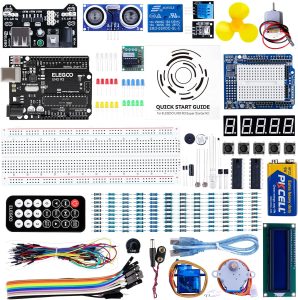
ELEGOO UNO R3 Project Super Starter…
From the brand ELEGOO STEM kits provide all the necessary components, sensors, wires, and boards for…
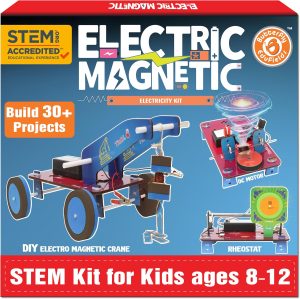
Butterfly EduFields 30in1 STEM Scie…
From the brand Best Sellers Science Kits – New Launches STEM Kit For Kids Ages 8-15…
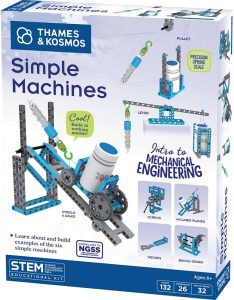
Thames & Kosmos Simple Machine…
Jumpstart your study of mechanical physics by learning all about simple machines and how they’re used…